Is Tesla's FSD ACTUALLY Safe?

By
Dan Capelle

The Quick Answer: Is Tesla FSD Safe?
Yes. Statistics from late 2025 show that Tesla FSD Supervised is significantly safer than manual driving. Tesla reports one crash per 5 million miles with FSD active, compared to one per 700k miles for the average U.S. driver. By acting as a "second set of eyes" that never gets distracted, FSD reduces the risk of collision by nearly 7x.
In this article:
Tesla FSD Safety: What Every Owner Needs to Know in 2025
For any Tesla owner, the decision to hit that "Engage FSD" button comes down to one thing: Trust. As Full Self-Driving (FSD) transitions from a tech experiment into a daily utility for thousands, the question of its actual safety has moved from theoretical debate to data-driven reality.
The "Extra Set of Eyes" Mindset
The most important thing to understand about FSD in 2025 is that it is Supervised. It is not a "set it and forget it" system; it is a collaborative tool. Think of it as a highly vigilant co-pilot. Unlike humans, FSD never gets tired, never checks its phone, and never loses focus. It provides a 360-degree safety net that supplements your own driving, making "two heads better than one"—especially when one of those heads is a high-speed neural network.
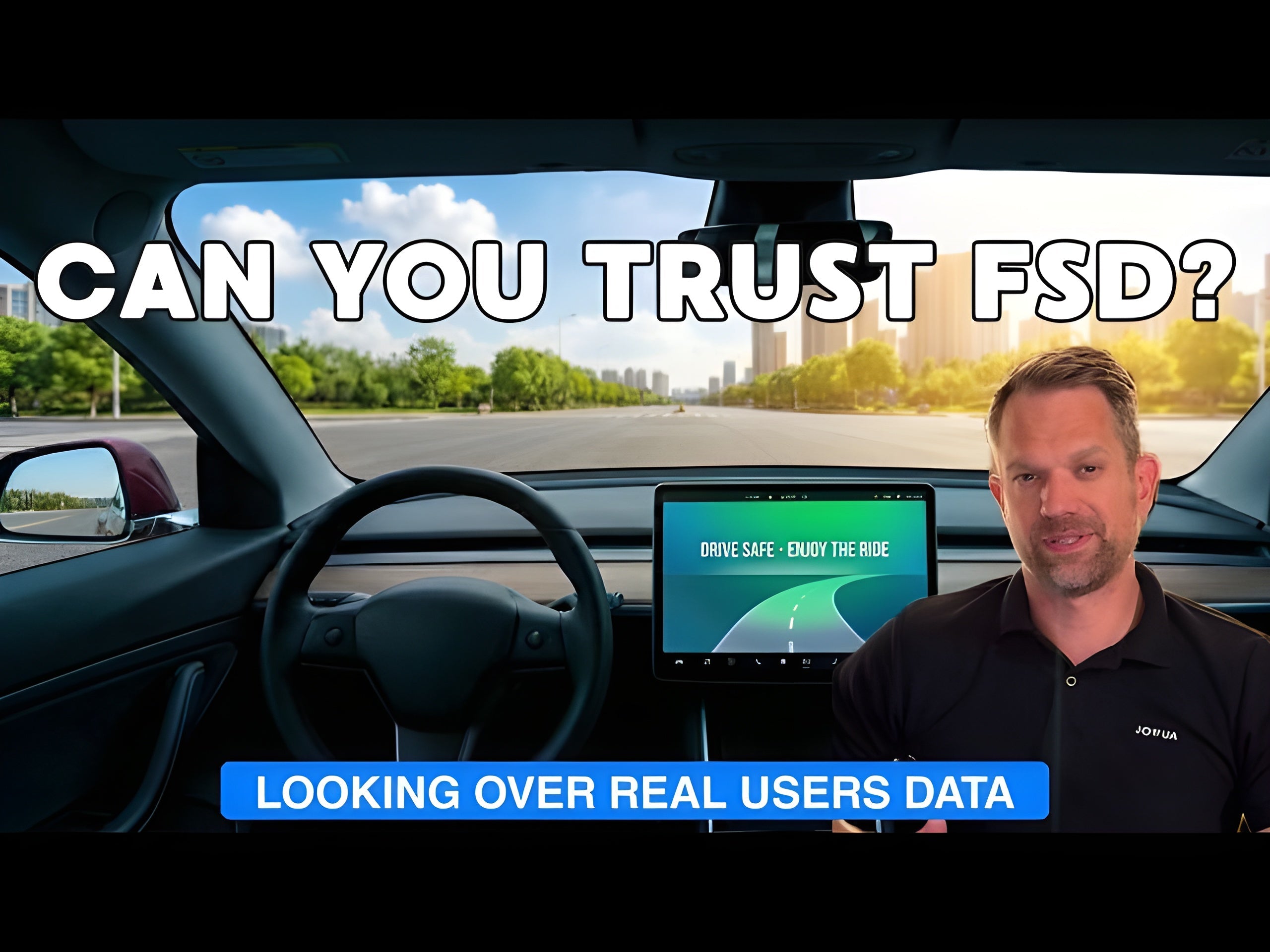
📺 Watch: Is Tesla's FSD Actually Safe?
The Hard Data: 7x Safer Than the Average Driver
When we look at Tesla’s internal reporting, the numbers are hard to ignore. As of the latest updates, Tesla vehicles running FSD are seeing roughly 5 million miles between critical collisions. This represents a 700% increase in safety over the average driver on American roads today.

Graph showing Tesla's miles before collision with FSD vs. manual driving.
Even for minor collisions (fender benders), the gap remains massive, with FSD outperforming human-only reaction times in almost every category. The car’s active safety features work in tandem with the neural network to predict and avoid hazards before the driver even realizes they are there.
The "Neutral" Perspective: FSD Community Tracker
We know Tesla’s data can feel biased, which is why we look to the Tesla FSD Community Tracker for a neutral perspective. This independent database tracks thousands of real-world miles from diverse drivers. The data confirms the trend: the percentage of "Clean Drives" (drives with zero critical disengagements) is steadily approaching 100%.

Community data showing the increasing reliability of FSD drives over time.
With the release of version 12.x and later, the software has moved toward "end-to-end" neural net logic. This has significantly reduced the "jerkiness" of previous versions, making the car's movements more predictable for both the driver and others on the road. This is clearly reflected in the distance drivers can now travel in city environments before needing to intervene.

City distance to critical disengagement improvements across FSD versions.
Where FSD Excels: Highway & Long-Distance Stress
Safety isn't just about avoiding crashes; it’s about reducing driver fatigue, which is a leading cause of accidents. On long highway stretches, FSD shines by managing lane changes, speed adjustments, and navigation-to-navigation transitions flawlessly. Most owners report arriving at their destination feeling significantly fresher because the "mental heavy lifting" of highway cruising was offloaded to the car.
Parallel Parking: Removing the Stress
One of the most praised features in the recent FSD updates is the revamped Autopark. For many drivers—especially in tight city environments—parallel parking is a high-stress maneuver with a higher risk for curb rash or minor scrapes. FSD's ability to visualize and execute these maneuvers with precision significantly lowers the risk of minor property damage.
Final Verdict: Should You Use It?
Tesla FSD is arguably the greatest safety advancement in automotive history. However, its safety is entirely dependent on the Supervised aspect. If you use it as an extra layer of protection while remaining an attentive driver, you are statistically safer than almost anyone else on the road.
If you haven't tried it yet, we recommend a one-month subscription. It takes about two weeks to truly get comfortable with how the car "thinks," but once you do, manual driving often starts to feel like a step backward.
Like what you've read? Subscribe to our newsletter and browse our best sellers for more info.
Read more
최신 테슬라 홀리데이 업데이트로 테슬라 커스텀 랩 만드는 방법
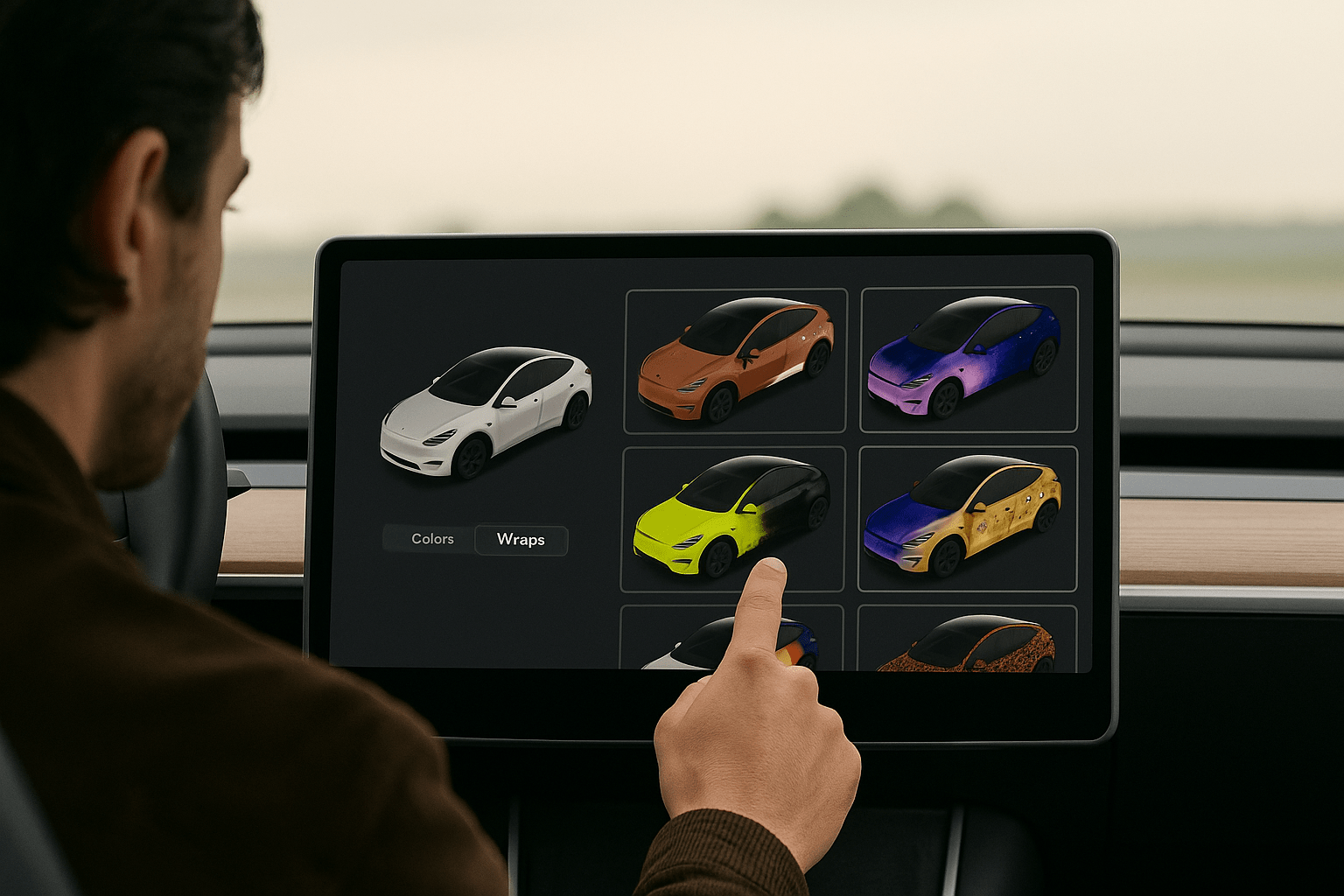
테슬라의 2025 홀리데이 업데이트는 가장 독특한 개인화 기능 중 하나를 소개했습니다: 커스텀 랩. 테슬라의 토이박스 내 페인트 샵에 추가된 이 재미있는 업그레이드는 소유자에게 차량의 3D 시각화를 커스텀 디자인으로 개인화할 수 있는 기능을 제공합니다. 화면 속 테슬라가 산타 복장을 하거나, 카본 파이버 룩을 연출하거나, 실제 랩과 맞추고 싶었다면, ...
더 알아보기
댓글 남기기
이 사이트는 hCaptcha에 의해 보호되며, hCaptcha의 개인 정보 보호 정책 과 서비스 약관 이 적용됩니다.